Frequently Asked Questions
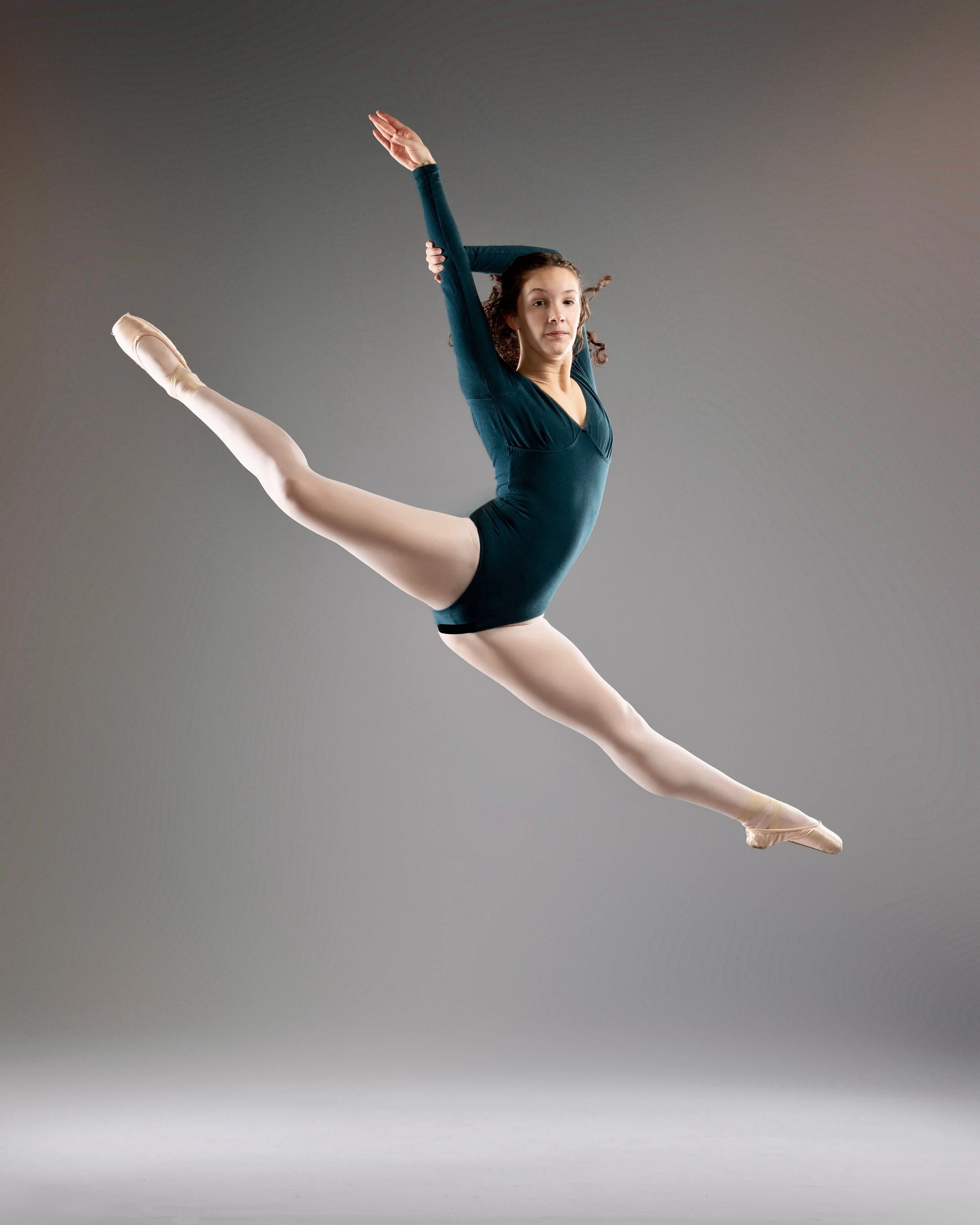
Advanced dancer, Eva Moehler
What is the dance attire or uniform?
All students are expected to wear the class leotard assigned to that level, pink ballet tights, and canvas ballet slippers with leather permitted for younger students in Levels 4 and below.(Cinnamon Tree in Herndon sells dance clothing. A ballet skirt is reserved for pointe students in Level 6 and up. All students must wear their hair pulled back in a neat bun with no bangs or wisps unless their hair is too short. Although we are sensitive to modesty for our students, we are first and foremost a classical ballet school. We do consider our students’ ages and choose appropriate costuming for them.
What is sacred dance?
Katy Eurich began being asked to present dance in church services while still professionally performing. It was during this time she was drawn to the beauty and power of sacred dance. Sacred dance embodies all movement that expresses or enhances spiritual experiences divine in nature. It may be a part of a worship service, a performance or a private spiritual practice. Rooted from our Judeo-Christian beliefs, the sacred dance at CDT is often performed in our annual spring production.
Do the students at CDT ever move on to dance professionally?
Almost all of our students who graduate from CDT either move on to study dance (in some form or another) or teach. Some students are pursuing a professional career in ballet and attend professional dance schools for their summer training. However, many of our students are dancers that desire professional training but know they will not dance professionally. They are not interested in recreational or competition studios and still want professional classical training.
Our students have gone on to train at prestigious institutions including the Joffrey Ballet, City Ballet of San Diego, the Belhaven University Dance Department, the Mercyhurst University Dance Department, and the Elon University Dance Department. They have continued their training as company trainees and apprentices, or pursued higher education as B.A., B.F.A., and Dance Minor students.
Many graduates also choose to share their passion by becoming dance instructors or by participating in dance clubs and performance teams at the colleges and universities they attend. Most importantly, the vast majority of our alumni continue to keep dance as a meaningful part of their lives long after graduation. Whether pursuing dance professionally or simply for the joy of it, they carry with them the discipline, artistry, and love of dance they developed at CrossRoads Dance Theater.
How do students move uP Levels or receive solo roles?
We base student's class placement first on ability, rather than age. Also, students taking multiple classes weekly and/or summer dance in comparison to those who do not may advance quicker regardless of their age. Solo roles in our performances are based on how quickly students pick up material, their ability to act or express themselves on stage, and their technical ability. We also consider how much time a student spends on their dancing and will often consider a role for them in order to encourage their hard work. Students are never entitled to specific roles. We always try and make sure each student feels like they are getting a fair time on stage. We want each student to feel important, no matter what role they get.